Diamond education
Guide to choosing a diamond
A diamond’s quality rests on three key characteristics: color, clarity and cut. Here is how each one is graded, and what to check on a certificate.
Loose diamonds
Smart Cut™ Diamonds, now at Isaac Jewelers
Smart Cut™ Diamonds were created for today’s knowledgeable, value-minded buyer, with one promise: the highest-quality, largest diamond for your budget.
As a diamond wholesaler, Isaac Jewelers is one of the area’s largest diamond sources, with some of its lowest prices. Choose a loose stone and our team will design the setting around it.
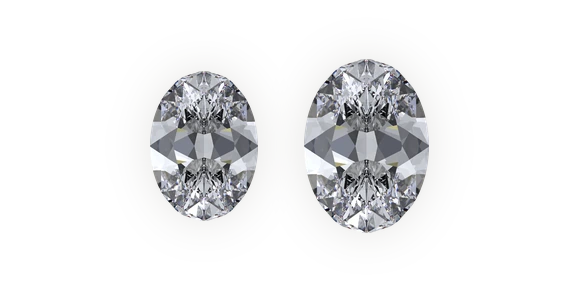 0.75 ct
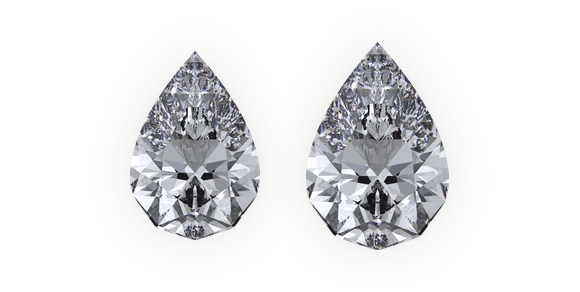 1.00 ct
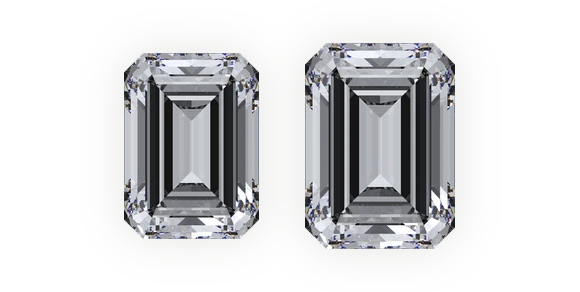 1.25 ct
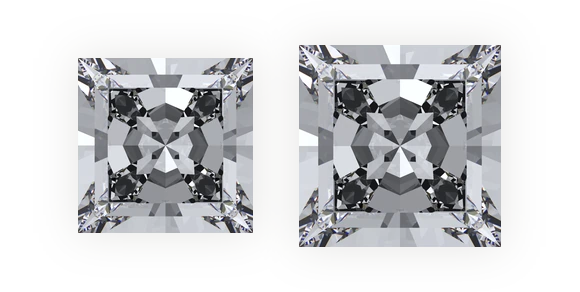 1.50 ct
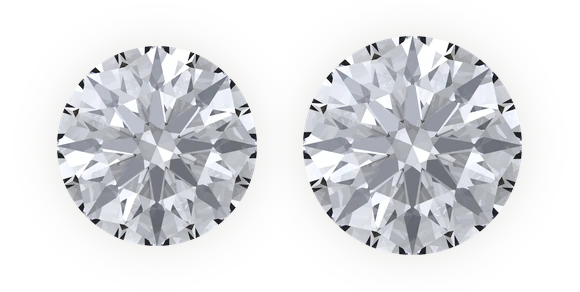 2.00 ct
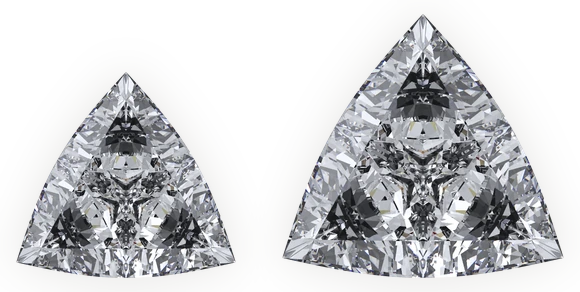 3.00 ct
Each pair shows a regular diamond on the left and a Smart Cut™ diamond on the right, at the carat weight shown. Illustration, drawn to the proportions in Smart Cut’s own comparison.
Color
The color scale runs from D (colorless) to Z (light yellow or brown). Truly colorless diamonds are very rare, and most diamonds used in jewelry are nearly colorless. Each grade is set by comparing the stone to a master set, and reflects how noticeable its color is.
Fluorescence
Some diamonds give off visible light under ultraviolet. Fluorescence is not a factor in color or clarity grades, and only about 2 percent of diamonds are estimated to be negatively affected by it.
Clarity
Clarity measures a diamond’s natural imperfections. Diamonds form under extreme heat and pressure, so a stone with no internal or external marks is very rare. The fewer the imperfections, the higher the grade, on a scale from Flawless to I3.
Cut
Cut is graded from Excellent to Poor. A well-cut diamond handles light in three ways. Brightness is the white light reflected from its surface and interior. Fire is the flare of color it throws. Scintillation is the flash you see when the diamond, the light or you move. Fine proportions, symmetry and polish increase all three.
Certificate
When you compare prices, compare every characteristic on the certificate, and compare diamonds graded by the same laboratory. The most common labs are GIA (Gemological Institute of America), AGS (American Gem Society), EGL and EGL US. GIA and AGS set the industry standard for credible grading. EGL and EGL US are generally seen as more lenient, although EGL US’s reputation has improved.